
1949: Pineapple Tea Cakes
Sweet and citrusy cupcakes with a pineapple butter frosting by Mrs. William Kretchman, an award-winning baker who deserves to be known

Name on the Recipe Card is a blog series about the unsung heroes of bygone kitchens, who competed and won a place at the national Pillsbury Bake-Off. Who are they? What are their names and stories? For many, they are only known by their husband’s names. Let’s shine a light on who they are and how they lived.
Daphine Ringer was born on October 16, 1891, in Davenport, Nebraska, the oldest of three sisters and one brother. Her father, Jeramiah “Jerry” Ringer, worked as a livery man—a profession that kept him close to horses and the rhythms of rural life. By 1910, Jerry owned a livery and horse barn and had two hired hands living with the family, a sign that he was doing well enough to provide stability and even a bit of prosperity. The Ringers owned their home, which was no small feat in those days.
Daphine graduated from high school in 1908, a notable accomplishment for a young woman in early 20th-century Nebraska. She went on to briefly teach elementary school, a role that suited her intelligence and sense of responsibility. In 1916, she married William Kretchman in Thayer, Nebraska, becoming Daphine Kretchman. William was a livestock farmer, and together they settled into the rhythms of rural life, eventually moving to Atkinson, where William became one of the largest landowners in the area. Over the years, census records show a variety of people living with them—friends, hired hands, and boarders—reflecting the communal and practical nature of farm life.
Life in Atkinson was shaped by the land and the seasons. Farming and ranching were the backbone of the region, with families raising cattle and hogs and growing crops like corn, wheat, and alfalfa. The town itself was modest but vibrant, with a grain elevator, general stores, and gathering spots like diners and feed stores. Homes were typically wood-frame farmhouses, built for durability and practicality. Many lacked modern plumbing or electricity until after World War II. Outbuildings like barns, granaries, chicken coops, and windmills were essential to daily operations.
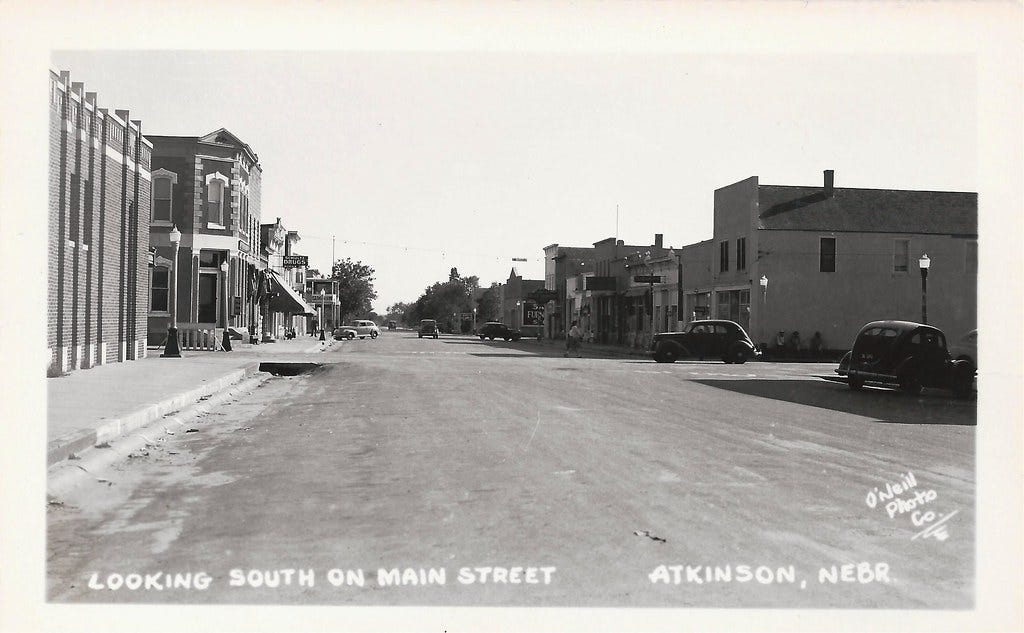
Neighbors helped each other with harvests, barn raisings, and emergencies. Social life revolved around churches, schools, and town events. The Atkinson Graphic newspaper chronicled everything from crop yields to pie socials. Events like the Diamond Anniversary in 1940 brought the town together with parades, dances, and club-organized festivities. The 1940 Census of Agriculture showed that Nebraska farms were largely family-run, with modest but functional housing and outbuildings. Ranching culture was strong in Holt County, where Atkinson is located—cattle drives, branding days, and livestock auctions were regular fixtures.
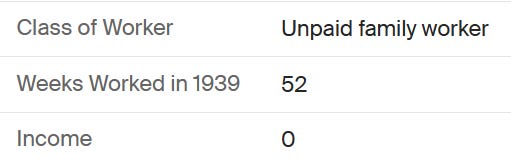
As a farmer’s wife, Daphine’s life was one of resilience and resourcefulness. She managed the household economy, often without modern conveniences. Beyond domestic duties, she was a full partner in the farm’s operations—feeding livestock, milking cows, tending gardens, and helping with harvests. As was often the way, the census records minimize the amount of effort involved. Here’s a snippet from Daphine’s 1930 census entry:
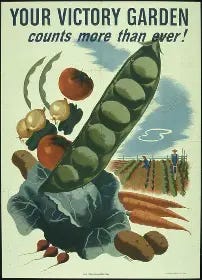
During World War II, she became a symbol of patriotic labor, leading the local effort to gather pledges for the Victory Home and Garden Program. Victory gardens were carefully planned and maintained, often producing enough to can and preserve vegetables for winter months. With rationing in effect, she learned to stretch ingredients—using carrots or beets to sweeten recipes when sugar was scarce and creating meatless meals to conserve rationed items.
Most Atkinson women also participated in local women’s clubs, church groups, and Red Cross sewing circles. These gatherings offered emotional support and practical aid. Magazines like The Saturday Evening Post and Good Housekeeping provided tips on gardening, preserving, and managing wartime shortages. The war years were hard, but they also brought moments of joy. In 1942, Daphine and William were honored with a “honkaree”—a jubilant car horn parade organized by 20 carloads of friends. The occasion was a housewarming party that drew 150 guests, though the census records don’t indicate a move. Perhaps it was a renovation, or simply an excuse to celebrate the couple’s enduring presence in Atkinson.
Daphine loved to cook and bake, and she often entered regional competitions. She was a proud member of the Goldhuskers Club, a group of dedicated contest-lovers who tested their skills in contests across Nebraska. Her crowning achievement came when she submitted her original recipe for Chocowaiian Cupcakes to the Pillsbury Bake-Off (which Pillsbury later renamed to “Pineapple Tea Cakes”). She won a $200 prize and a trip to the finals in New York City. When Pillsbury’s A.E. Stadler arrived at her door with the check, she had cupcakes freshly baked and ready to share. “I have cold feet already,” she joked to the local paper, “but I’m sure the glamor of New York will warm them up.”
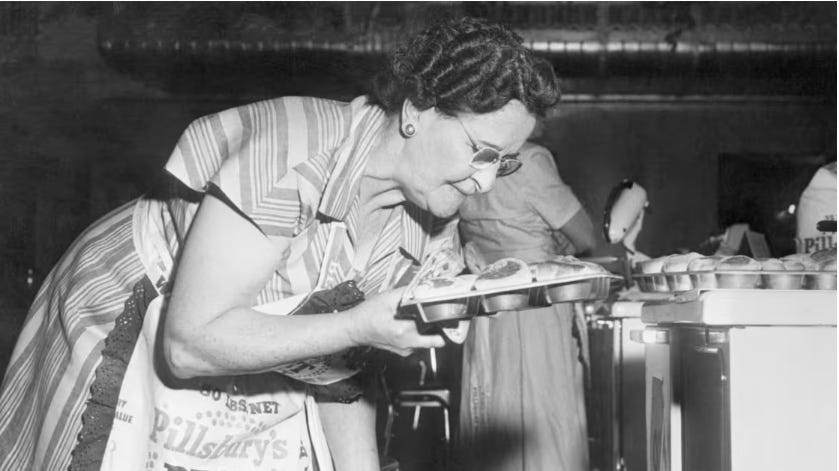
In New York, Daphine was treated like royalty. She appeared on the Fred Waring Show, baked all day on December 12, and was whisked off to dinner and a Rockettes performance at Radio City Music Hall. The following morning, the winners were announced at a breakfast. Though she didn’t win the grand prize, she returned home with a General Electric Stratoliner oven, a Hamilton Beach mixer, McCormick spices and spice rack, and a suite of kitchen tools. She even gained local fame, endorsing products like Nash’s Coffee in 1953.
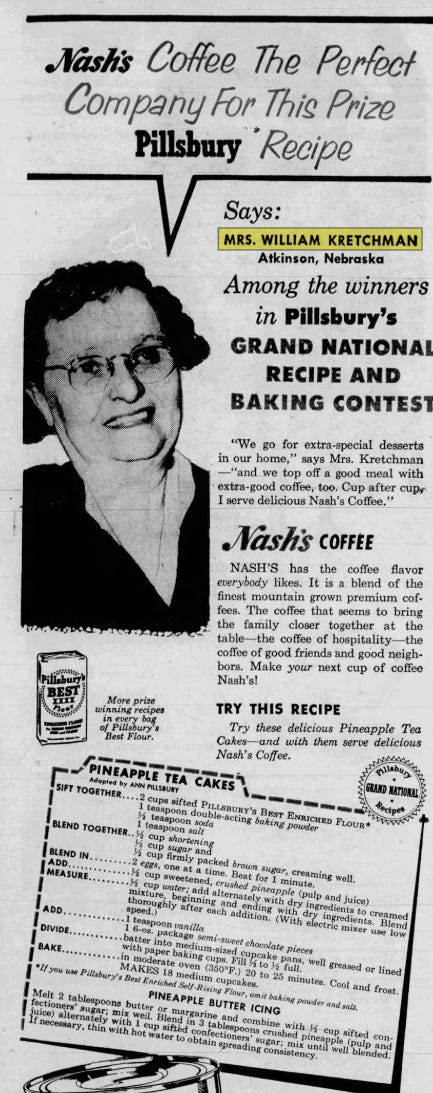
By the late 1950s, Atkinson farms were more mechanized and specialized. Combines, irrigation systems, and hybrid seeds changed the landscape. Rural electrification brought refrigerators, radios, and electric stoves, transforming domestic life. The role of the farmer’s wife began to shift—while still central to the farm, she had more access to education, consumer goods, and civic engagement. From 1916’s hand-built homesteads to 1957’s modernized operations, Atkinson’s farm families adapted to war, weather, and technological change.
Daphine passed away on October 16, 1957—exactly 66 years after her birth. She had been ill for some time, first hospitalized in Atkinson, then transferred to Omaha for advanced care. Her brother and husband were at her side when she died.
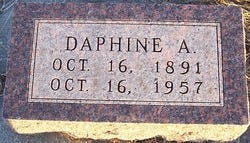
Her obituary in The Atkinson Graphic referred to her simply as “Mrs. William Kretchman,” a reflection of the era’s customs, but those who knew her remembered her as much more: a teacher, a baker, a community leader, and a resilient partner in the life of a Nebraska ranch. Her funeral was held at the Presbyterian church and was attended by many from the community she had served and celebrated for decades.
Let’s Make Cupcakes!
With the inclusion of canned pineapples, this recipe screamed mid-20th century to me. It’s an easy recipe to put together and could easily be baked as a tea loaf or even a cake, if you’d rather have that instead of cupcakes. I made the cupcake version so I don’t have bake times handy for the alternative versions. I was happy to hear that Daphine considered these cupcakes rather than “tea cakes”, which in my mind is a totally different type of baked good. She was surprised to have won a spot at the finals with this recipe, telling the local paper that “I didn’t really expect a cupcake recipe to win a finalist prize”. Finalists were chosen by several criteria, including creativity and ease of baking. This recipe wins both with the combination of pineapple and chocolate chips and the simple icing with canned pineapple mixed into it. You can easily leave off the frosting and these would still be tasty.
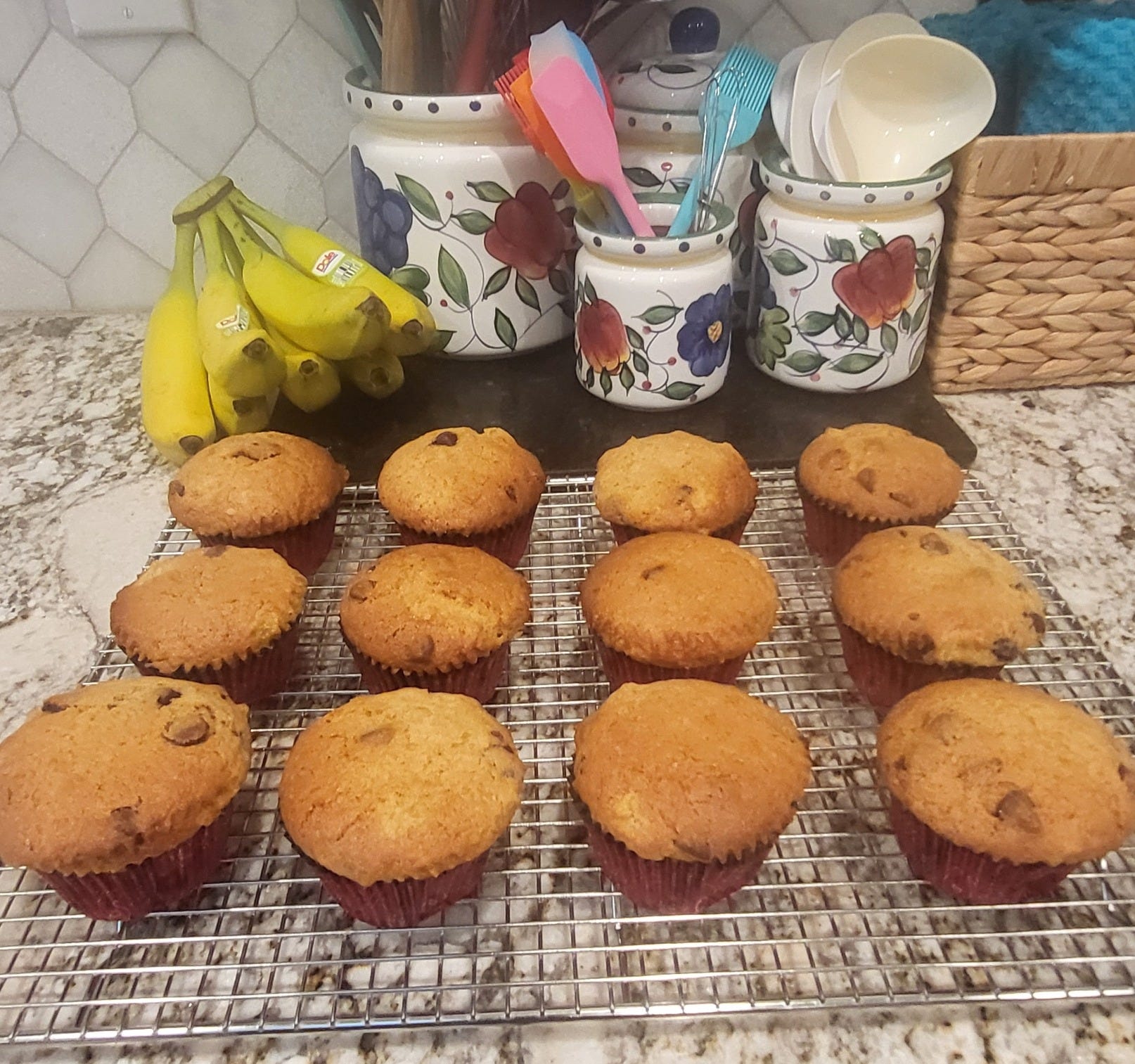
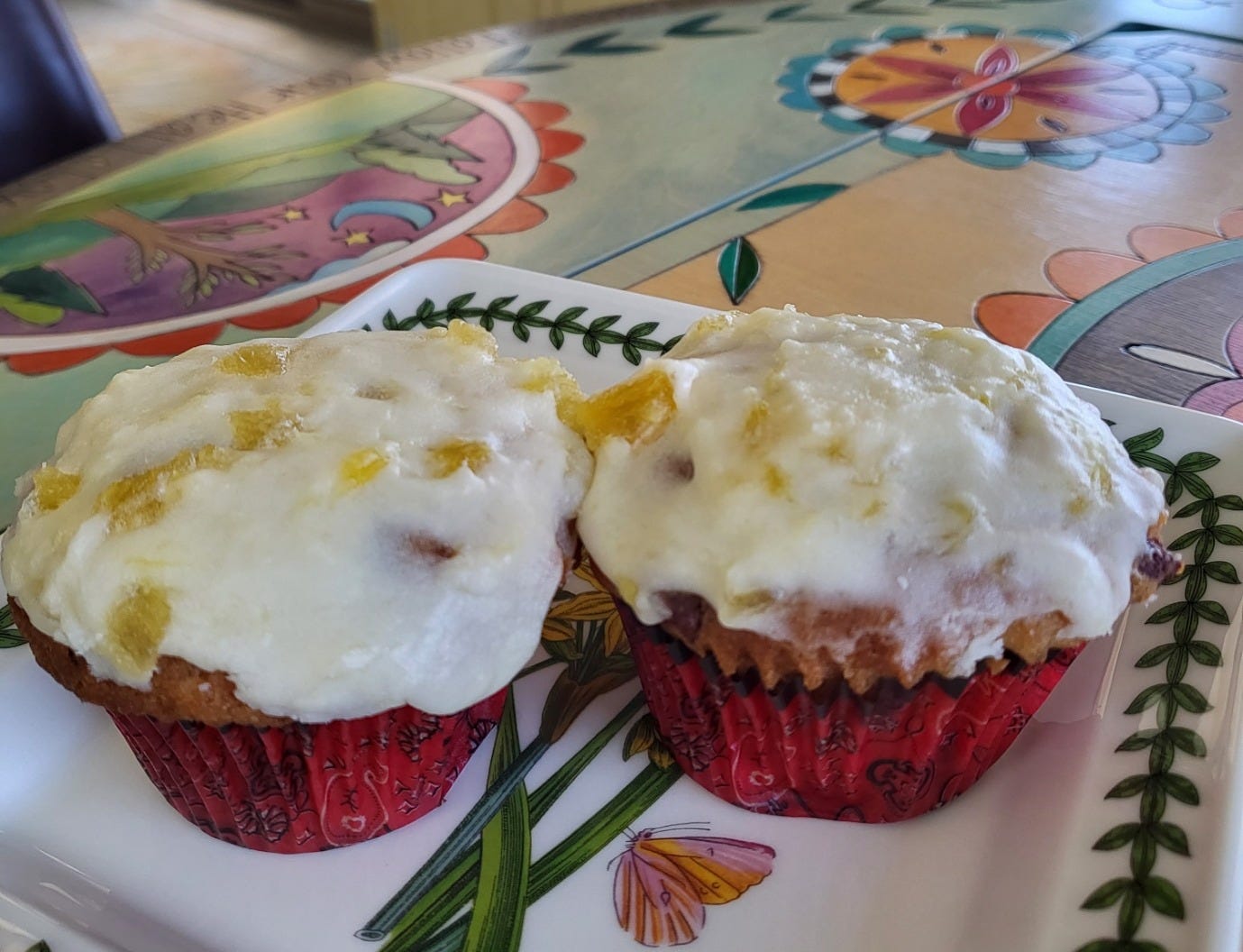
Verdict: We found these to be a little too sweet for our tastes, but they were better the next day when the flavors had a chance to blend and mellow. The icing and the chocolate chips overwhelm the pineapple in the cupcakes themselves, leading my husband to wonder whether the recipe would be better with pineapple in the batter. There IS pineapple in the batter, but it gets lost. Having said all that, we liked them but maybe would leave off the icing next time.
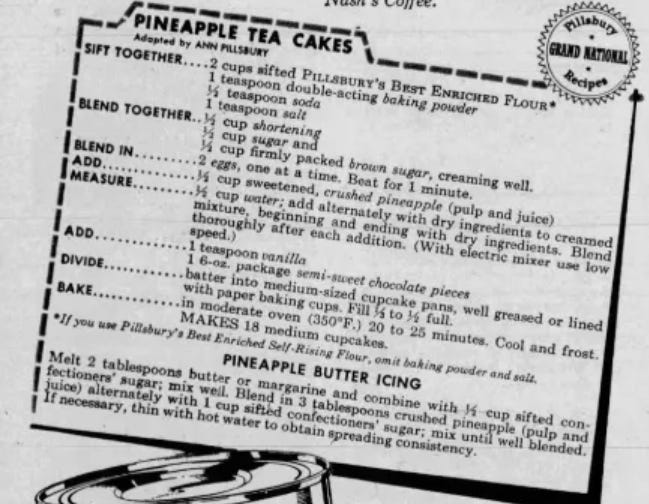
Having people over for coffee or tea? These would be very nice as an afternoon tea snack. Here’s the recipe if you’d like to give them a try:
(Recipe published in the 1959 edition of “Pillsbury’s BEST of the BAKE-OFF Collection” and here in the December 1953 edition of The Nebraska Farmer)
Makes 18 cupcakes, according to the recipe, but in my modern cupcake pan, it made 12.
Sources:
Advantage Archives. (n.d.). Digital archives of the Atkinson Public Library. Retrieved August 7, 2025, from https://atkinsonne.advantage-preservation.com/
Pastmaps. (n.d.). 1950s maps of Atkinson, Nebraska.
LDS Genealogy. (n.d.). Atkinson genealogy (in Holt County, Nebraska).
The National WWII Museum. (2024, November 26). Victory gardens: Food for the fight. Retrieved August 7, 2025,
Silver Homestead. (n.d.). The 1940’s Victory Garden (how backyard gardens helped endure WWII rationing).
Complete Gardening. (2025, June 1). WWII Victory gardens from the 1940s: How people planted them, and how you can grow your own even now.
Pillsbury Mills, Inc. (1959). Best of the bake-off collection: Pillsbury's best 1000 recipes. Consolidated Book Publishers, Chicago; distributed by Grosset & Dunlap
The Atkinson Graphic. (1949, December 2). Atkinson farmwife’s cupcake recipe wins $200 (p. 1).
The Atkinson Graphic. (1957, October 18). Mrs. William Kretchman dies in Omaha (p. 1).
The Nebraska Farmer. (1953, December 5). (Untitled article) (p. 30).
These sound really interesting. I definitely would leave off the icing but I might like to make these into small cupcakes and dust with powdered sugar. Interesting story.
Fascinating, as always!