
1949: Cocoa Layer Cake
A light, moist chocolate layer cake by Mrs. Peter Funcke, an award-winning baker whose name should be known

Name on the Recipe Card is a blog series about the unsung heroes of bygone kitchens, who competed and won a place at the national Pillsbury Bake-Off. Who are they? What are their names and stories? For many, they are only known by their husband’s names. Let’s shine a light on who they are and how they lived.
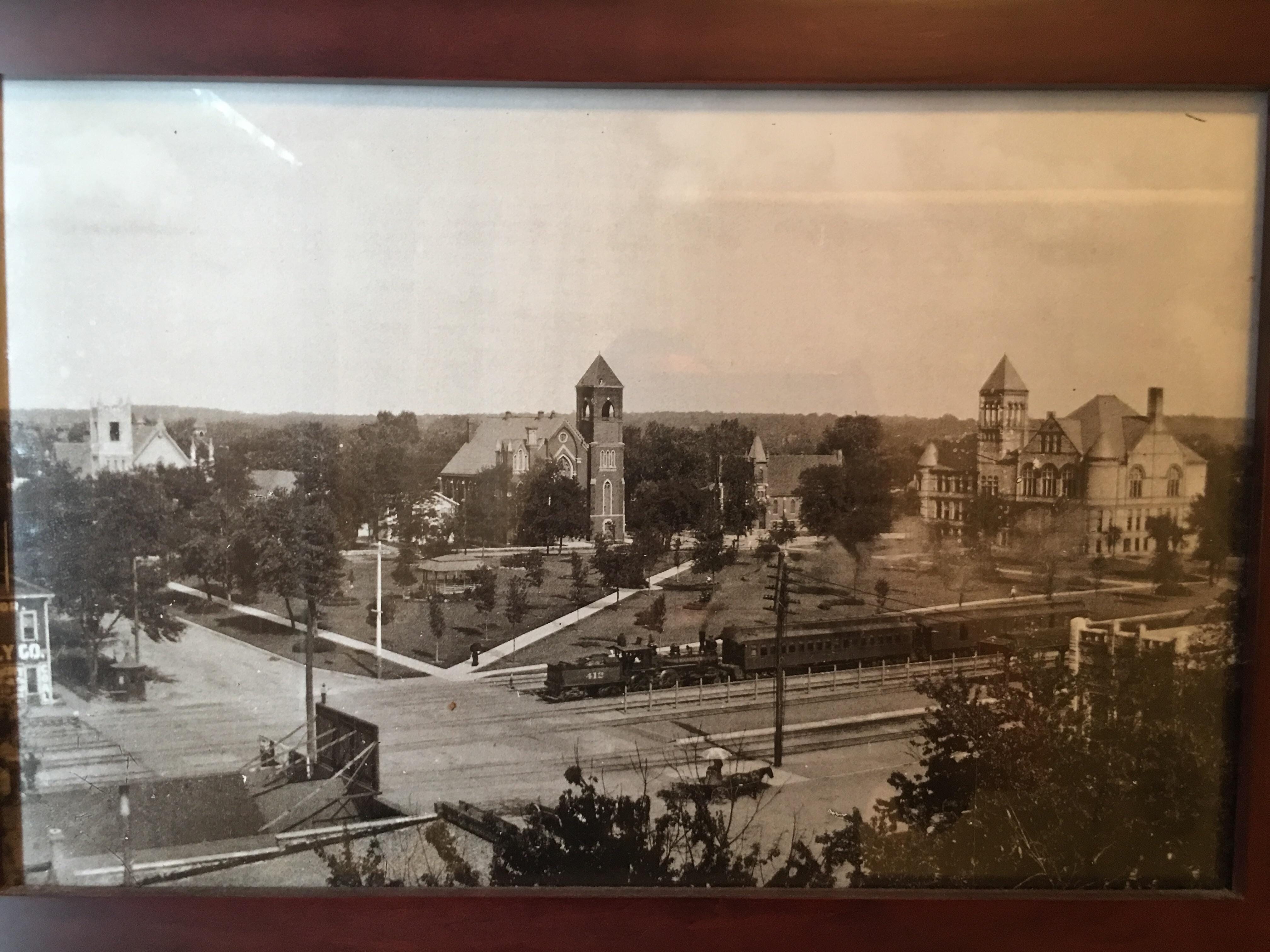
Leona Mae Prochaska was born in Cedar Rapids, Iowa, in November 1903, just one month after the man who would become her lifelong partner, Peter Funcke. Her parents, Edward and Bessie, were children of Austrian immigrants. Edward worked as a shipping clerk, and the family lived in a city that was growing fast, powered by industry, agriculture, and a strong sense of community.
Cedar Rapids in Leona’s youth was a place of bustling downtowns, streetcars, and civic pride. By the time she was a teenager, the city was weathering the Great Depression. Quaker Oats and other food manufacturers helped keep the economy afloat, and churches, schools, and clubs offered support and structure. Leona came of age in a world where resilience was a daily practice.
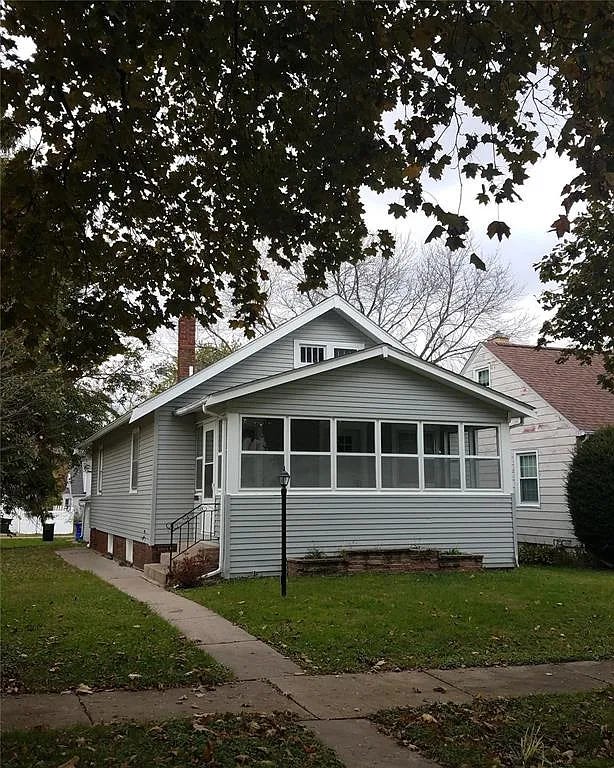
On August 26, 1925, Leona married Peter Funcke. They honeymooned in Chicago, then moved in with her parents until they bought their own home in 1927—a modest two-bedroom bungalow at 2008 D Avenue, shaded by trees and graced with a grassy backyard. It would be their home for the rest of their lives.
Peter joined the Cedar Rapids police force in 1929 as a beat cop. Leona, meanwhile, was building a life centered around family, baking, and community. She supported Peter and the community as a member of the Police Auxiliary, helping organize Christmas parties and summer picnics for the Cedar Rapids Police Department.
She was a devoted mother to two sons: Bill, born in 1928, and Jack, born in 1931. Both boys attended Franklin High and later Iowa State. Bill served in the Navy during WWII and became a surgeon; Jack became a machine tool designer and father of five.
During the 1940s, Cedar Rapids transformed with the war effort. Factories hummed, neighborhoods expanded, and civic life flourished. Leona kept her household running and found joy in baking. She always worked from recipes—though she’d “doctor them up a bit.” But she admitted that when she cooked on the stovetop, she “threw in a bit of this and that.” Peter, with his sweet tooth, was her willing taste tester and later acted as her prep chef after he retired and could spend time with Leona in the kitchen.
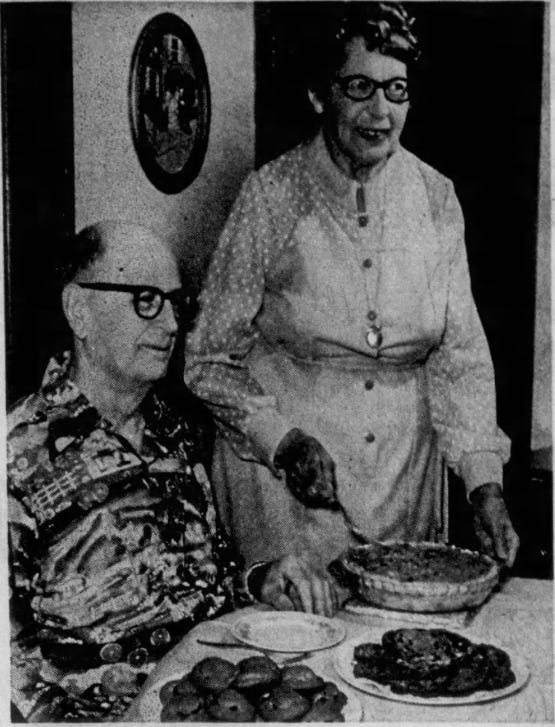
In 1949, Leona entered the Pillsbury Bake-Off (for the first, but not the last, time) and came home with a new oven and mixer. Her entry, initially named “Lambie Pie” by Leona but renamed by Pillsbury to the far more boring “Cocoa Layer Cake”, was a light chocolate layer cake with a white boiled frosting. She competed again in 1950, winning a cash prize for her biscuit recipe, and once more in 1951 with her “Lovey Doves”—a date-filled cookie bar. Her recipes, often whimsically named (“Lambie Pie,” “Lovey Doves”), became family traditions. Peter’s favorite was her Fruit Roll Bread and “Gramma Lee’s gingerbread men” were especially beloved, the latter born from baking for one of her grandsons.
Leona’s baking fame extended beyond the contest stage. In 1951, she was interviewed on Walter Mason’s local radio show, Tell Your Neighbors. And even as late as 1976, a local newspaper article printed several of her recipes and noted she was still using the oven she’d won 25 years earlier. Paid subscribers will receive a bonus article in their email, highlighting those recipes.
She was also a bit of a contest enthusiast outside of her baking. In 1938, she entered a Christmas contest honoring local businesses. In 1955, she took fourth prize in a “Name the Furniture” contest. And in 1982, she won a weekly word scramble competition.
Through it all, Leona and Peter remained devoted. They celebrated their wedding anniversary every year over the course of 73 years together with a family dinner at a local restaurant, their sons hosting it for them in their adult years. Leona passed away in 1998 at Mercy Medical Center, aged 94. Her obituary proudly noted her Pillsbury Bake-Off wins. Peter followed her in 2004, living to 101. The family they left behind included 13 grandchildren and 15 great-grandchildren.
The home on D Avenue, the gingerbread men, the radio interviews and contest wins—all tell the story of a woman who baked with love, lived with joy, and left behind a legacy of sweetness and strength.
A fun fact about Peter that bears noting:
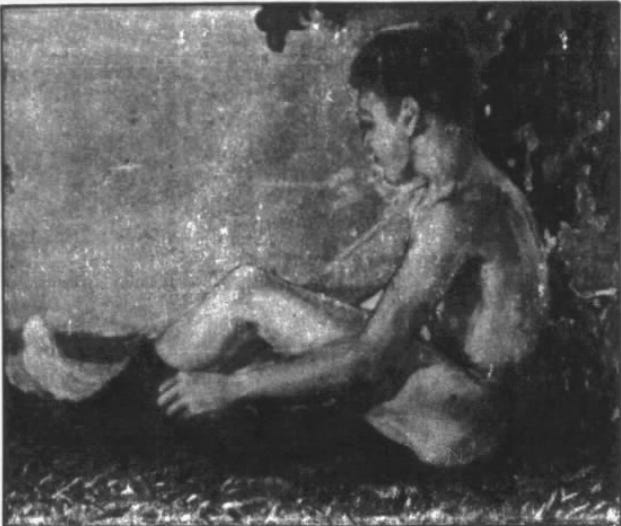
Grant Wood (American artist, 1891 – 1942) was Peter’s neighbor when he was growing up. When he was 16, Wood asked him to pose for a painting when he was getting ready for a swim. According to Peter, skinny-dipping was “the only way we went swimming back then.”
Let’s Make Cake!
We were surprised to find the texture of this cake to be very soft and light, like a modern boxed mix cake. The batter includes evaporated milk, which is an unusual ingredient in cake batter and perhaps helped to make such a silky texture. But the milk also softens the cocoa flavor so the cake itself has more of a milk chocolate flavor. Of course, it’s frosted with my icing nemesis, a white boiled frosting. I cannot get those right so over the course of the next few days, the icing disintegrated. The cake, however, stayed fresh and delicious.
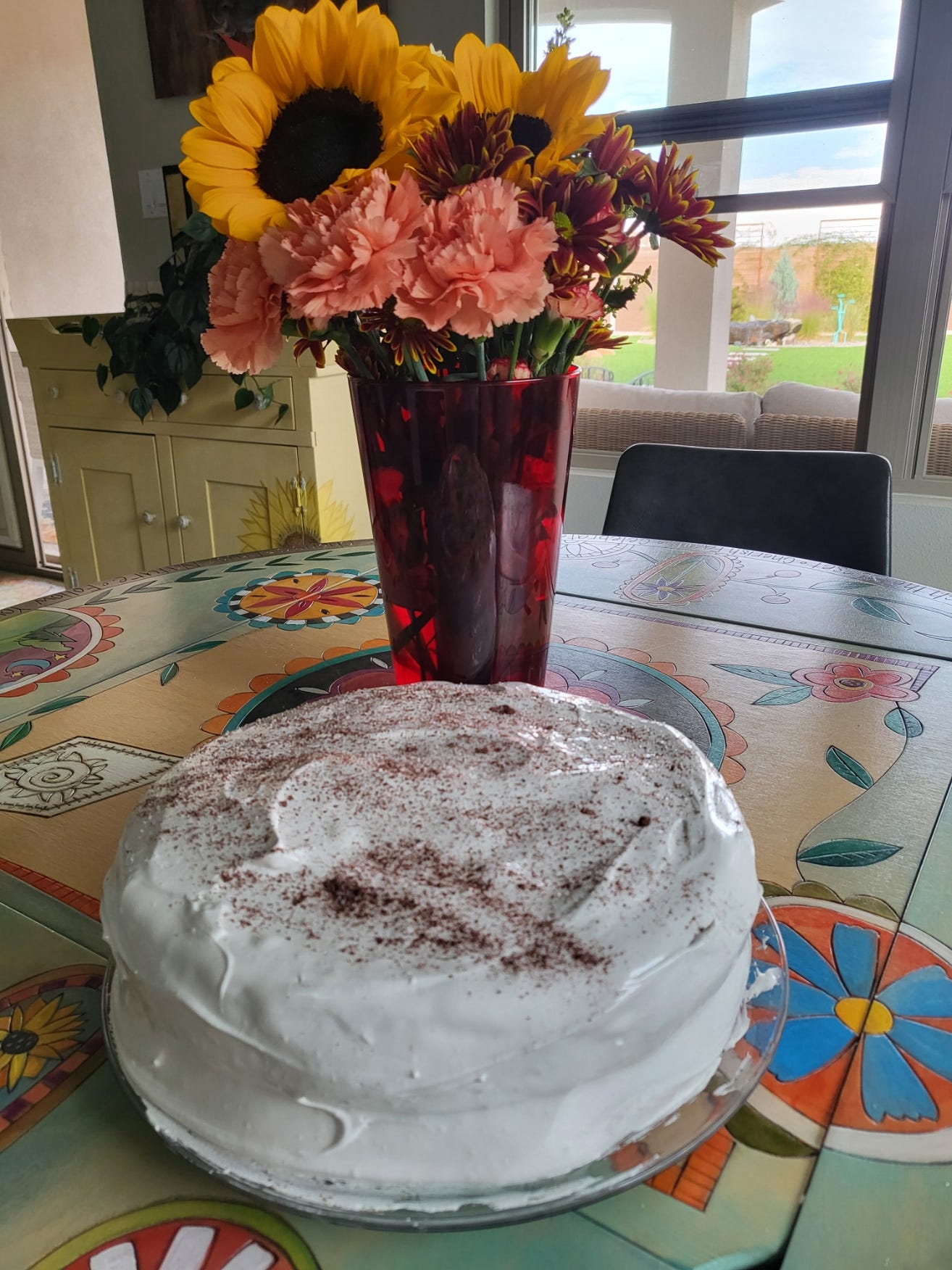
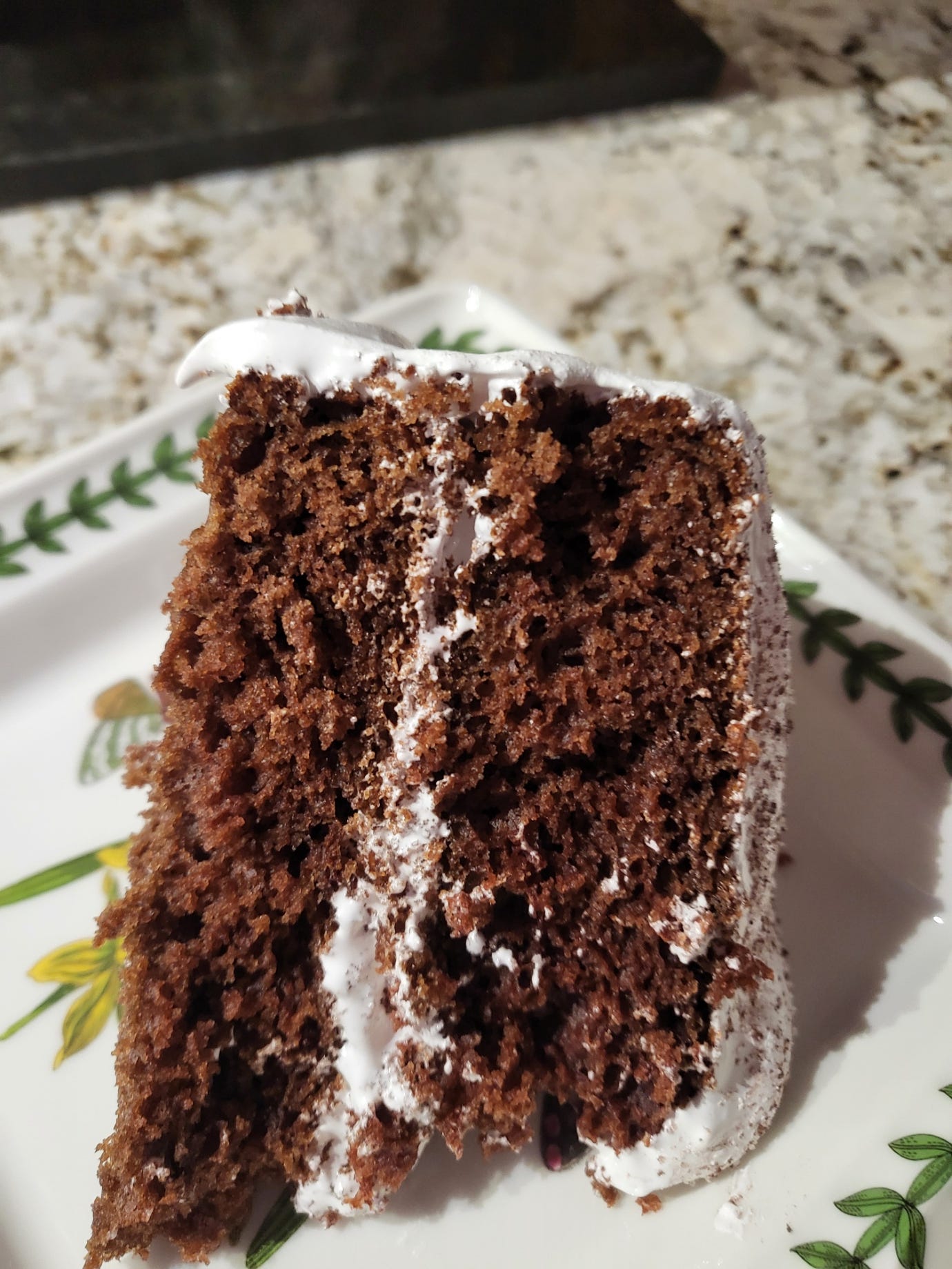
Verdict: The actual cake was a hit with us - light, soft, subtly chocolate. The first night, even the frosting was delicious but it didn’t maintain its consistency over the coming days. That’s my fault, not the recipe, so don’t be daunted by my failure. :-)
Leona’s love language was baking and she had a trove of family favorite recipes. Try this one and maybe it will become one of yours! Paid subscribers will get a few more in their mailboxes so stay tuned.
(Recipe published in the 1959 edition of “Pillsbury’s BEST of the BAKE-OFF Collection”)
Makes two 8-inch layers
Sift together and set aside:
1 3/4 c. sifted all-purpose flour
1/4 c. cocoa
1 tsp. baking soda
1 tsp. salt
Cream together:
1 1/4 c. sugar
2/3 c. shortening (I used European-style butter)
Blend in:
2 eggs, beating well after each
Combine:
2/3 c. evaporated milk
1/2 c. water
1 tsp. vanilla
Add alternately with the dry ingredients to the creamed mixture. Blend well after each addition.
Turn into two 8-inch round layer pans, well-greased and lightly floured on the bottom.
Bake at 350 degrees for 30-35 minutes. Cool; frost with White Mountain Frosting.
White Mountain Frosting
Frosts two 8 or 9-inch layers
Combine in saucepan:
2 c. sugar
1/2 c. water
1 tbsp. light corn syrup
Cook over low heat, stirring until sugar dissolves. Cover pan 2-3 minutes; uncover and continue cooking to firm soft-ball stage (240 degrees).
Beat until stiff but not dry:
2 egg whites
1/8 tsp. salt
1/8 tsp. cream of tartar
Pour hot syrup over beaten egg whites in a slow, steady stream, beating constantly. Blend in 1 tsp. vanilla; continue beating until of spreading consistency.
Sources:
Pillsbury Mills, Inc. (1959). Best of the bake-off collection: Pillsbury’s best 1000 recipes. Consolidated Book Publishers, Chicago; distributed by Grosset & Dunlap
The Gazette. (1949, November 26). Mrs. Funcke finalist in national recipe contest (p. 2). Cedar Rapids, IA.
The Gazette. (1951, March 8). [Article title unavailable] (p. 19). Cedar Rapids, IA.
The Gazette. (1976, November 28). Leona’s recipes are real prize winners (p. 53). Cedar Rapids, IA.
The Gazette. (1983, August 21). Cedar Rapidians contribute to Wood’s work (p. 28). Cedar Rapids, IA.
Cedar Rapids Gazette. (1995, August 26). [Article title unavailable]. Cedar Rapids, IA.
Cedar Rapids Public Library. (n.d.). Annual reports and board minutes, 1930s–1940s. Cedar Rapids Public Library Archives.
Quaker Oats Company. (1930s–1940s). Corporate history and wartime production records. Cedar Rapids Historical Society Archives.
Cedar Rapids Telephone Directory. (1937–1940). Residential and business listings. Cedar Rapids Historical Society.
Iowa State Historical Society. (n.d.). Cedar Rapids in the Great Depression and World War II.
This kind of archival work matters so much more than people realize. The detail you've uncovered about Leona's life gives her back the recognition she deserved but never got simply because her accomplishments were domestic. I grew up hearing family stories about my grandmother's cooking but nobody bothered to write down her reciepes, and now those connections are lost. The Pillsbury Bake-Off was essentially a national stage for women's expertise in an era that simultaniously celebrated and dismissed homemaking, and documenting these stories rescues them from being reduced to footnotes in their husbands' names.
Lorinda, That’s the icing I’m talking about! It disappears but is so fluffy. When we get home I need to check Mom’s recipe for her cocoa layer cake. It may be the same and was always iced with that icing. Yum!